
Isaac Rife
Marketing strategist focused on practical execution & lasting improvement
I help organizations strengthen their marketing through thoughtful strategy, effective execution, and the systems that support long-term success. Whether developing a campaign, improving a process, or implementing new technology, my focus is on creating practical solutions that continue delivering value long after launch.Throughout my career, I've worked across marketing strategy, branding, digital communications, CRM, partnerships, and operations. While the projects have varied, they've shared a common goal: helping organizations communicate more effectively, improve how marketing works, and create lasting impact.
Experience & focus
Marketing Strategy & Campaigns
Experience supporting and executing multi-channel marketing initiatives across digital, content, and event-focused efforts.
Operations & Systems
Background in marketing operations, workflows, platforms, and processes that improve coordination and execution.
Digital Communications
Experience with email marketing, web content, audience communications, and platform management.
Cross-Functional Collaboration
Worked closely across departments, leadership teams, partners, and external stakeholders to support shared goals and complex initiatives.
Events & Audience
Engagement
Supported conference, event, and engagement efforts through campaign planning, communications, content, and creative assets.
Content & Creative Support
Created and managed messaging, graphics, presentations, and marketing materials across a variety of formats and audiences.
Let's connect
I’m always interested in discussing full-time opportunities, consulting projects, freelance work, and professional connections.In the meantime, feel free to explore my portfolio or view my resume to learn more about my experience.
Featured Work

Establishing a Strategic Marketing Function
Established a marketing foundation by developing core messaging, communication processes, and marketing materials that created a more consistent brand presence and scalable foundation for future growth.

Building a smarter audience communication system
Built a more flexible, subscriber-centered communication system by redesigning audience segmentation, preference management, and communication workflows for publications, event messaging, and automated journeys.

Modernizing Sponsorship Operations
Modernized sponsorship materials, workflows, and operational systems to create a more scalable process that improved partner experience and internal coordination across multiple events.
Selected Work

Advertisement Design: Designed a print advertisement promoting emergency preparedness solutions for Virginia hospitals, combining concise messaging, strong visual hierarchy, and audience-focused copy to communicate value in a highly limited format.

Brand Refresh: Modernized the organization's visual identity by creating a cleaner, more flexible design system that improved consistency across digital and print communications.

Conference Sponsorship Guide: Designed an annual sponsorship guide that communicated event opportunities, sponsorship benefits, and audience insights while supporting sponsorship sales and partner engagement.

Digital Advertising: Planned, designed, and optimized digital advertising campaigns supporting audience growth, event promotion, and partner marketing initiatives.
Automated Outreach Campaign: Designed and implemented multi-touch, behavior-based Salesforce Marketing Cloud journeys using audience segmentation, automated email sequences, and engagement-based decision logic. Trailhead screenshot example shown

Industry Blog: Researched, developed, and published original articles that established thought leadership and translated complex topics into practical insights for healthcare audiences.

Case Study: Developed partner success stories that transformed real-world outcomes into compelling marketing assets, strengthening credibility while supporting business development.

Partner Network Launch: Led the creation and launch of a new partnership program, including positioning, messaging, website content, application workflow, and supporting marketing materials that established a new revenue-generating offering.
Webinar Promotion: Developed promotional graphics for webinars and educational events, translating complex topics into clear, engaging marketing that supported registration and audience participation.

Company Overview: Created an animated overview video from concept through production, using visual storytelling and messaging to communicate the organization's consultative approach and partner value.


Interested in learning more?
This portfolio highlights a selection of my work across marketing strategy, branding, CRM, content, digital campaigns, and design. If you'd like to discuss the goals, process, or results behind any of these projects, I'd love to connect.
For a more detailed look at my experience and professional background, you can view my resume below.
Contact
Thanks for visiting!Whether you're interested in full-time opportunities, consulting or freelance work, or simply connecting professionally, I'd love to hear from you.
Portfolio Updates in Progress
I'm currently refreshing my portfolio examples. Please check back soon.In the meantime, feel free to check out my resume or connect with me on LinkedIn.
Case Study
Modernizing Sponsorship Operations
A sponsorship strategy and operations project focused on modernizing sponsor communications, improving operational workflows, and building a more scalable sponsorship operation.
Primary Focus: Operations Strategy | Process Design | Sponsor Experience
The Situation
As in-person events resumed following the COVID-19 pandemic, the sponsorship program needed updated materials, more consistent processes, and a stronger operational foundation to support renewed engagement efforts. Existing information and workflows were spread across multiple spreadsheets, legacy documents, and reference materials, creating an opportunity to build a more connected and scalable system.At the same time, sponsors needed clearer information, greater flexibility, and a smoother overall experience as engagement efforts restarted across multiple events and audiences.The goal wasn't simply to refresh promotional materials. It was to rebuild the sponsorship process as a connected system that improved clarity for sponsors while creating a more organized and scalable internal workflow.
Rebuilding the System

Sponsor Communication & Package Design
Redesigned sponsorship brochures and package structures, incorporating stakeholder feedback to improve clarity, flexibility, and usability while helping sponsors better understand available opportunities and event audiences.

Sponsor Intake & Workflow Improvements
Introduced a more structured sponsor intake and commitment process designed to reduce back-and-forth communication, improve accountability, and collect key information earlier in the workflow.

Sponsorship Operations System
Built a centralized sponsorship operations system that served as the operational hub for sponsor management, fulfillment, and cross-functional coordination across multiple conferences, consolidating tracking processes into a structured framework that supported day-to-day operations and related workflows.
Outcomes & Impact
The rebuilt process created a stronger operational foundation for sponsorship growth.167% year-over-year sponsorship revenue growth
FY24 to FY25While that growth wasn't the result of any single brochure, tracker, or workflow change, the more structured sponsorship system helped support increased volume by improving sponsor communications, standardizing intake, and giving internal teams better visibility throughout fulfillment.
Case Study
Building a Smarter Audience Communication System
A communication strategy and audience architecture project focused on giving subscribers greater control over communications while creating a scalable foundation for audience segmentation, preference management, and automated communication workflows.
Primary Focus: Communication Strategy | Audience Architecture | Marketing Automation
The Situation
Communication processes had evolved over time across publications, event invitations, and organizational updates, resulting in overlapping lists, manual subscriber management, and broad assumptions about audience preferences. This created an opportunity to establish a more consistent audience strategy and scalable system for managing subscriber communications.
Limited Subscriber Control
Subscribers could only fully unsubscribe rather than manage communication preferences for individual publications or topics.
Fragmented Audience Management
Audience segmentation relied on multiple lists and manual processes, making targeted communication difficult to manage and scale.
Communication & Compliance Risks
Existing opt-out and resubscription workflows relied on manual processes that created operational friction, increased compliance risk, and made it more difficult to ensure subscriber preferences were consistently respected.
Rebuilding the Communication System

Preference Center & Subscriber Experience
Designed and built a centralized preference center, refining the experience through stakeholder feedback to give subscribers greater control over the communications they received while simplifying subscription management. The experience reduced friction for subscribers while creating a more sustainable approach to ongoing preference management.

Audience Architecture & Segmentation
Translated stakeholder input into a scalable audience architecture by structuring subscriber preference categories and designing the underlying data model that supported targeted communications and membership-based segmentation. The framework established a flexible foundation for preference management, future onboarding, and lifecycle communications.

Automation & Communication Workflows
Developed the operational workflows that processed subscriber preference updates, synchronized subscriber data across systems, and automated ongoing preference management. The workflows reduced manual effort, improved data consistency, and ensured subscriber preferences remained synchronized throughout communications.
Outcomes & Impact
Established the communication architecture needed to support a more segmented, subscriber-centered communication ecosystem.
The project established a scalable framework for subscriber preference management, publication subscriptions, audience segmentation logic, and automated lifecycle communications within Salesforce Marketing Cloud.The resulting architecture gave the organization a more flexible and sustainable framework for managing subscriber communications while supporting future growth and evolving communication strategies.
Case Study
Establishing a Strategic Marketing Function
A strategic marketing leadership project focused on building a formal marketing function from the ground up by defining long-term strategy, operational processes, and scalable marketing systems.
Primary Focus: Marketing Strategy | Organizational Leadership | Marketing Operations
The Situation
As the organization grew, marketing needs expanded beyond individual initiatives and required a more formal marketing function, documented strategy, and long-term framework for generating awareness, supporting business development, and driving organizational growth. The opportunity was to create a stronger foundation for marketing efforts through clearer planning processes, operational structure, and performance measurement.Building that marketing function required more than developing a strategy document. It meant establishing the systems, governance, reporting, digital channels, planning processes, and performance measurement framework needed to support consistent execution while positioning marketing as a strategic business function.
How the Function Was Built
Strategic Marketing Direction
Developed a comprehensive marketing strategy in alignment with organizational leadership, establishing long-term priorities, defining target audiences, identifying key marketing channels, and creating a multi-year roadmap that connected marketing initiatives with broader business objectives. The strategy transformed marketing from individual activities into a coordinated function with clear direction and measurable goals.
Illustrative example of a marketing strategy document
Marketing Operations & Infrastructure
Established the operational framework needed to execute the strategy consistently, including campaign planning, editorial calendars, reporting dashboards, performance measurement, governance, and standardized marketing processes. These systems created repeatable workflows that improved visibility, accountability, and long-term scalability.
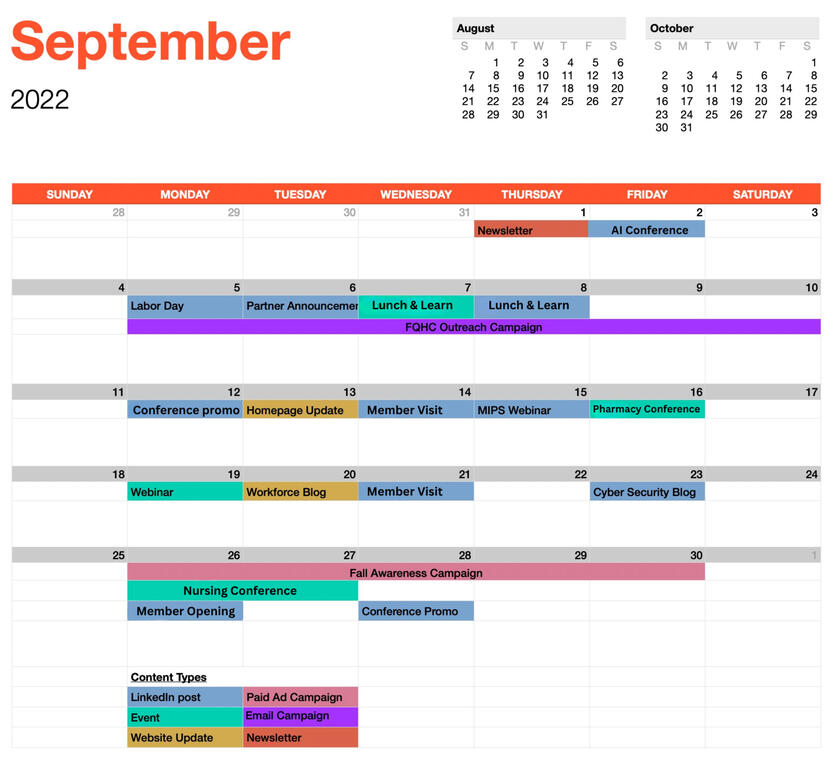
Illustrative example of a marketing calendar
Marketing Execution & Growth
Executed the strategy through coordinated digital marketing initiatives, including website enhancements, content marketing, email campaigns, social media, partner promotions, and brand management. Performance was continuously measured through centralized reporting and analytics, enabling marketing efforts to be refined over time while demonstrating measurable organizational value. Together, consistent execution and ongoing optimization transformed marketing into a reliable driver of awareness, engagement, and business growth.
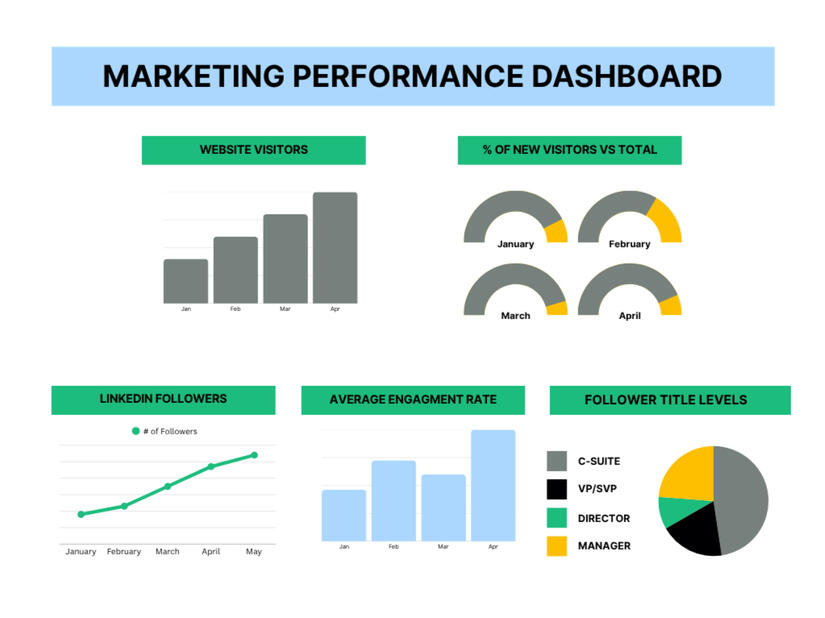
Illustrative example of marketing performance reporting dashboard
Organizational Impact
Established a strategic marketing function that enabled more consistent, measurable, and scalable growth.
The project established more than a marketing strategy. It created the organizational capability to plan, execute, measure, and continuously improve marketing across channels through a unified strategic and operational framework.The resulting marketing function guided organizational marketing efforts for multiple years, introduced consistent planning and performance measurement, expanded digital marketing capabilities, and provided a scalable foundation for future initiatives. By aligning strategy with execution, marketing became a more intentional driver of awareness, business development, and long-term organizational growth.
Highlights
- Established a formal marketing strategy, providing the roadmap that guided marketing initiatives across multiple fiscal years.
- Launched a LinkedIn presence, establishing a new digital marketing channel that consistently achieved double-digit engagement while expanding brand visibility.
- Increased average monthly website traffic by more than 260% over two fiscal years through strategic digital marketing efforts.
- Introduced standardized planning, reporting, and operational processes, creating a scalable framework that continued supporting organizational marketing efforts.